Since 1992 · Kochi

One teacher's question. Everything that came out of it.

Playway Books is a small publisher in Kochi. One book so far, written by a chemistry teacher who was tired of watching students lose marks on notation nobody had taught them.

It began with a question she kept asking herself in her own classroom. Why do children who understand chemistry still get the writing of it wrong? Not the ideas — the notation. The symbols, the valency, the formulas, the equations. That is the part every syllabus assumes and none of them sets aside time to teach. The answer she worked out in 1992 is still the whole business.

It was published four years later as Metro Kits, Kit–I, The Language of Chemistry, Playway Method. It is now The Language of Chemistry, Playbook®. Same method, same author, same tokens.

What we are for

A deeper list, not a wider one.

Playway Books publishes books that teach the written language of a subject before asking a student to use it. The Language of Chemistry is the first of them. The intention is not a catalogue but a shelf, every title built the same way. Something a student does with their hands before they do it with a pen. Exercises they mark themselves against answers printed in the book. And a chapter that does not open until the score is made.

We are not trying to make chemistry easy, and we do not say so anywhere. We are trying to make the notation automatic, so that a student who understands the reaction does not lose the mark writing it down. That is a narrower promise than most educational publishing makes. It is also one a parent can check: the gate is printed in the book, and so are the answers.

1992 to now

Thirty-four years of the same idea.

The method did not start as a book. It started in one Kochi classroom in 1992, because the language of chemistry was the part the students kept failing and no textbook set out to teach it. It became a product four years later, and a company thirty years after that.

  1. 1992

    The method is used for the first time, at St. Aloysius ISC School in Kochi. Students who had been struggling to write symbols and formulas start getting them right.

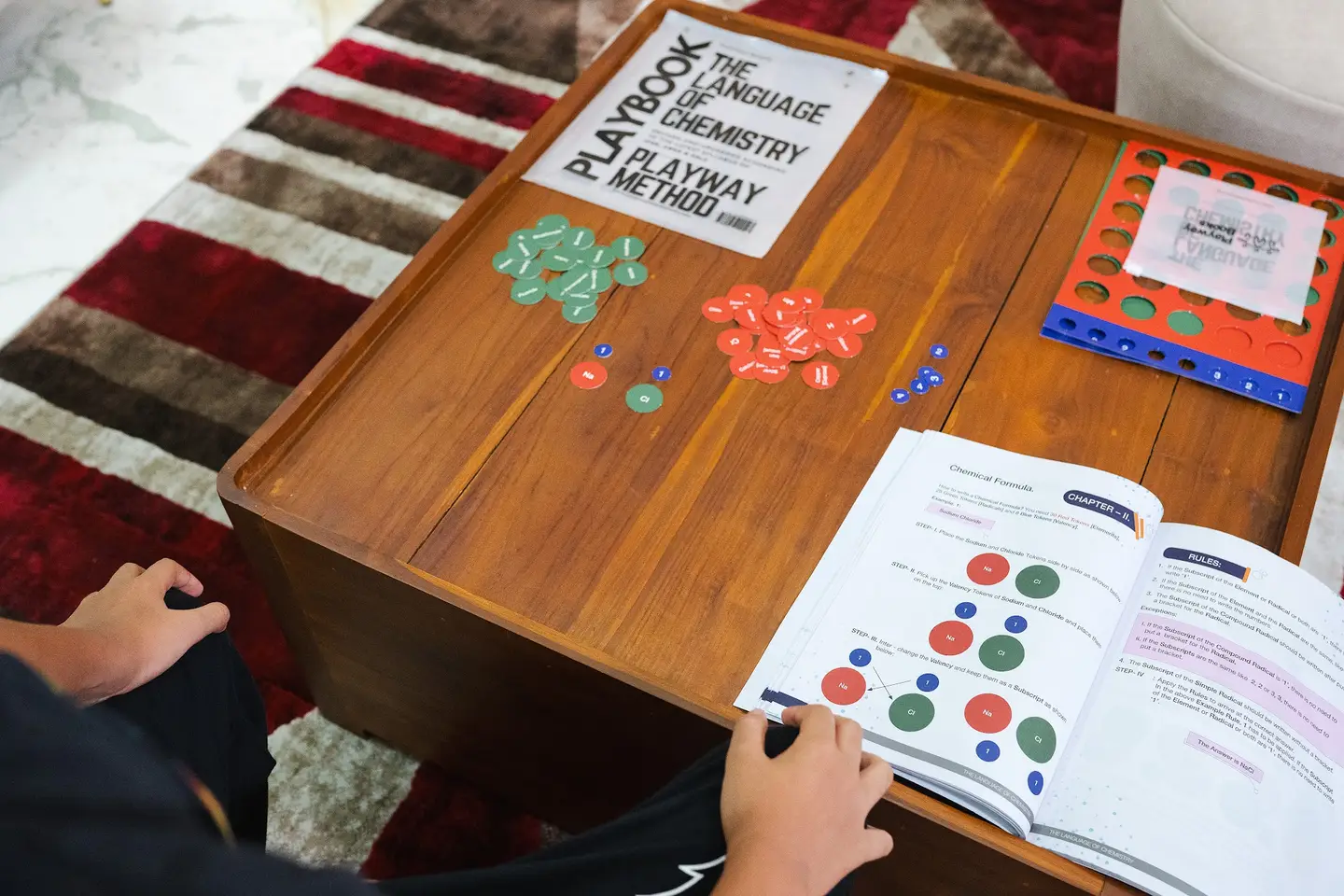
    The current edition’s Chemical Formula page, with tokens placed on it — not a photograph of the 1992 teaching material, which has not survived or been photographed.

    Illustrative — no photograph of the 1992 material exists. Shown: the current edition.

  2. 1995

    The Council for the Indian School Certificate Examinations asks ICSE schools to send in approaches they have tried on the hard spots its Pupils Performance Analysis keeps identifying. Writing symbols, formulas and balanced equations are among them.

  3. 1996

    On 6 May 1996, Lilly Joseph and her husband Suresh Joseph found MetroKits in Kochi. The classroom method becomes something a family can buy: Metro Kits, Kit–I, The Language of Chemistry, Playway Method.

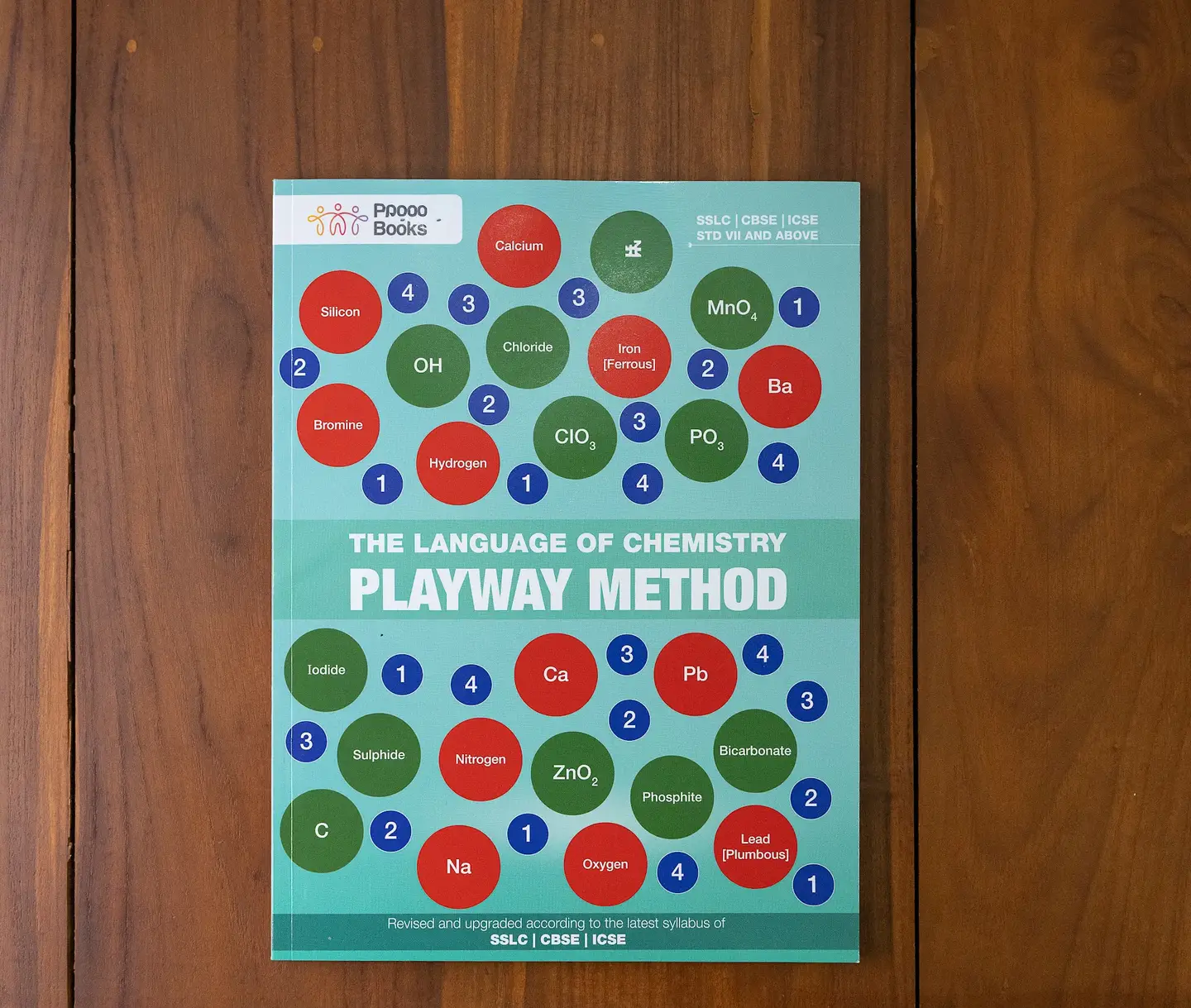
    The current edition’s cover, laid flat — not the 1996 Metro Kits original, which has not been photographed.

    Illustrative — this is the current edition, not the 1996 original.

  4. 2002

    On 4 December the Principal of St. Aloysius ISC forwards a copy to the Council. On 18 December the Council replies that the kit she developed “will certainly help in making the basic concept of writing correct chemical formulas and balanced equations clearer to students”.

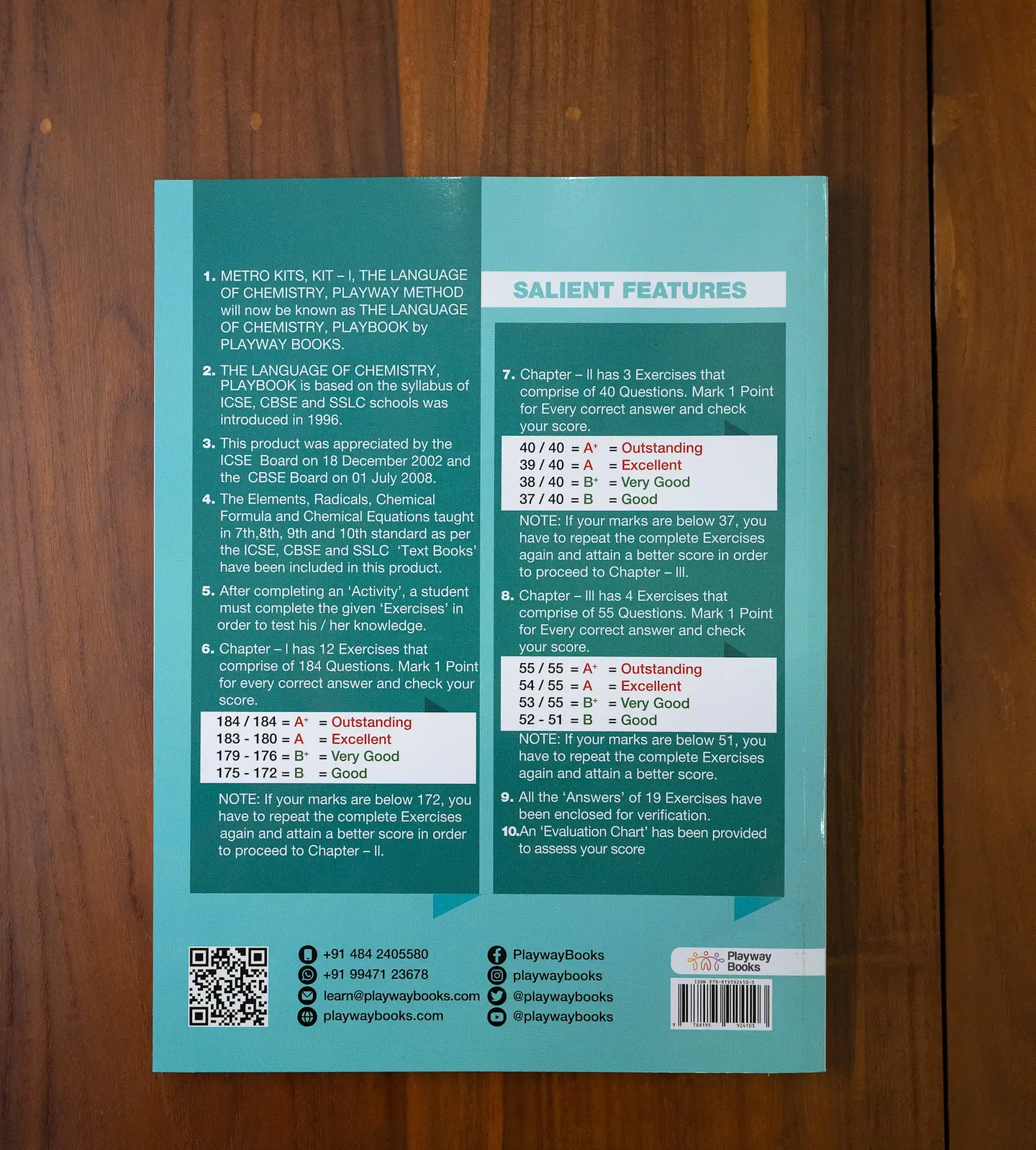
    The book’s back cover, carrying the date 18 December 2002. Not the original CISCE letter, which has not been photographed.

    Not the original letter — the same date, printed on the book’s own back cover.

  5. 2008

    NCERT’s Department of Education in Science and Mathematics writes on 1 July calling the activities “thought provoking”, and the step-up procedure and self-assessment guidelines “well appreciated”.

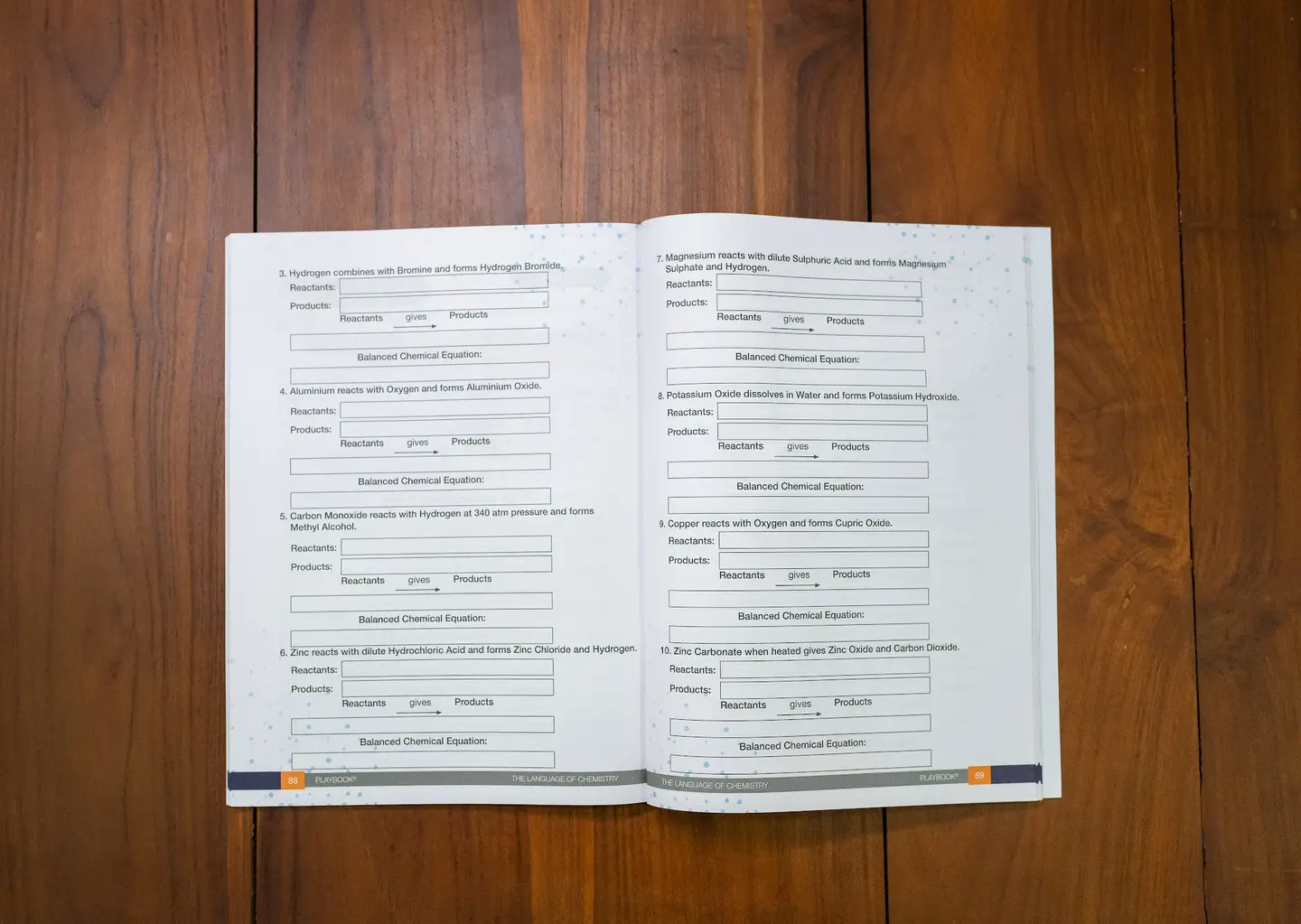
    A balancing-equations exercise spread from the current edition — not the original NCERT letter, which has not been photographed.

    Not the original letter — no photograph of it exists yet.

  6. 2022

    On 23 February 2022, twenty-six years of trading are restructured as Playway Books Private Limited, in Ernakulam, and the method is republished as The Language of Chemistry, Playbook®.

    The current edition’s cover with its two punch-out sheets — shown alone, not beside the 1996 original.

    The current edition, shown alone — no photograph of the 1996 original exists for the comparison.

  7. 2026

    A second title for Classes 10 to 12 is in preparation — the same method against board-level material.

The three foundations

Three foundations. All three older than the company.

Named here rather than left to be inferred, because they are what a parent or a head of department is actually deciding about. One book, Classes 7 to 10, across ICSE, CBSE and the Kerala State Board (SSLC).

A pedagogy

The language of chemistry, taught the way a language is taught. It was worked out by a working chemistry teacher at St. Aloysius ISC School, Kochi. The method everyone else used was to memorise thirty elements, twenty-five radicals, and the formulas and equations built out of them — and it was not working for a large part of her class. She stopped treating the notation as a list to be learnt. She started teaching it the way anyone teaches a language.

The Playway Method

Alphabets, then words, then sentences. The alphabets are the name, symbol and valency of the elements and radicals; the words are chemical formulas built from them; the sentences are balanced equations built from the words. Nothing in the second step is possible without the first, and nothing in the third without the second. That is not a marketing sequence. It is how the subject is built, and it is why a student who has done the alphabets can write a formula nobody has shown them.

Gamification — learn by play

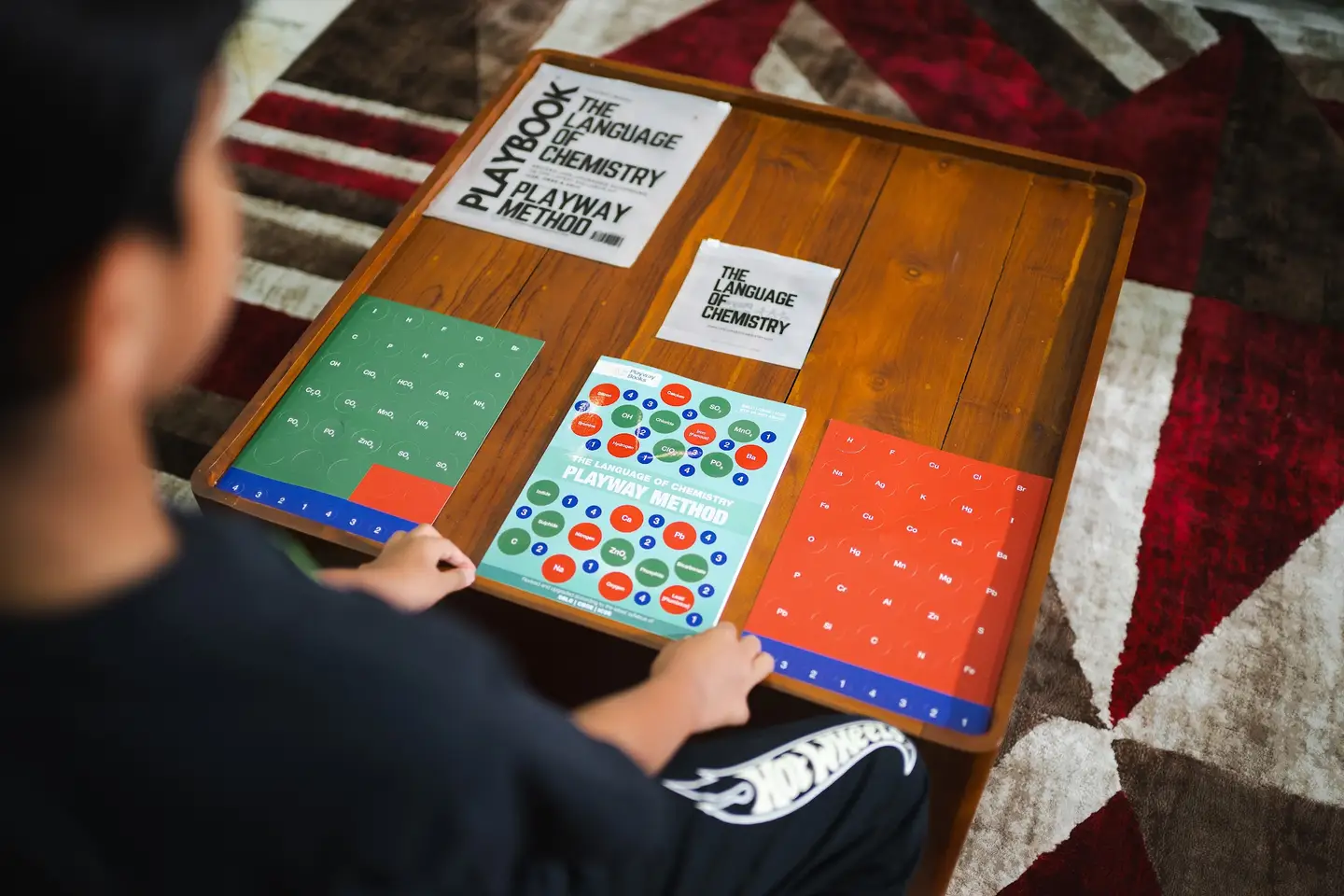
The delivery, not the decoration. A child works with the punch-out tokens on the 2 sheets enclosed in the book: choosing the right tokens and putting them in the right order, by hand, before writing anything down. Each token is printed on both sides — an element's full name on one face and its symbol on the other. Turning it over and recognising that these are the same thing is the first activity in the book, not a footnote to it.

It has to be said plainly, because it is the point: the play is intrinsic. There are no points, no streaks, no badges and no leaderboards. The reward for getting a formula right is the formula being right. Chapter I closes at 172 of 184, which is 93.5%, and a student below it repeats the whole set of exercises before going on. That is a standard, not a pass mark.

See the Playway Method
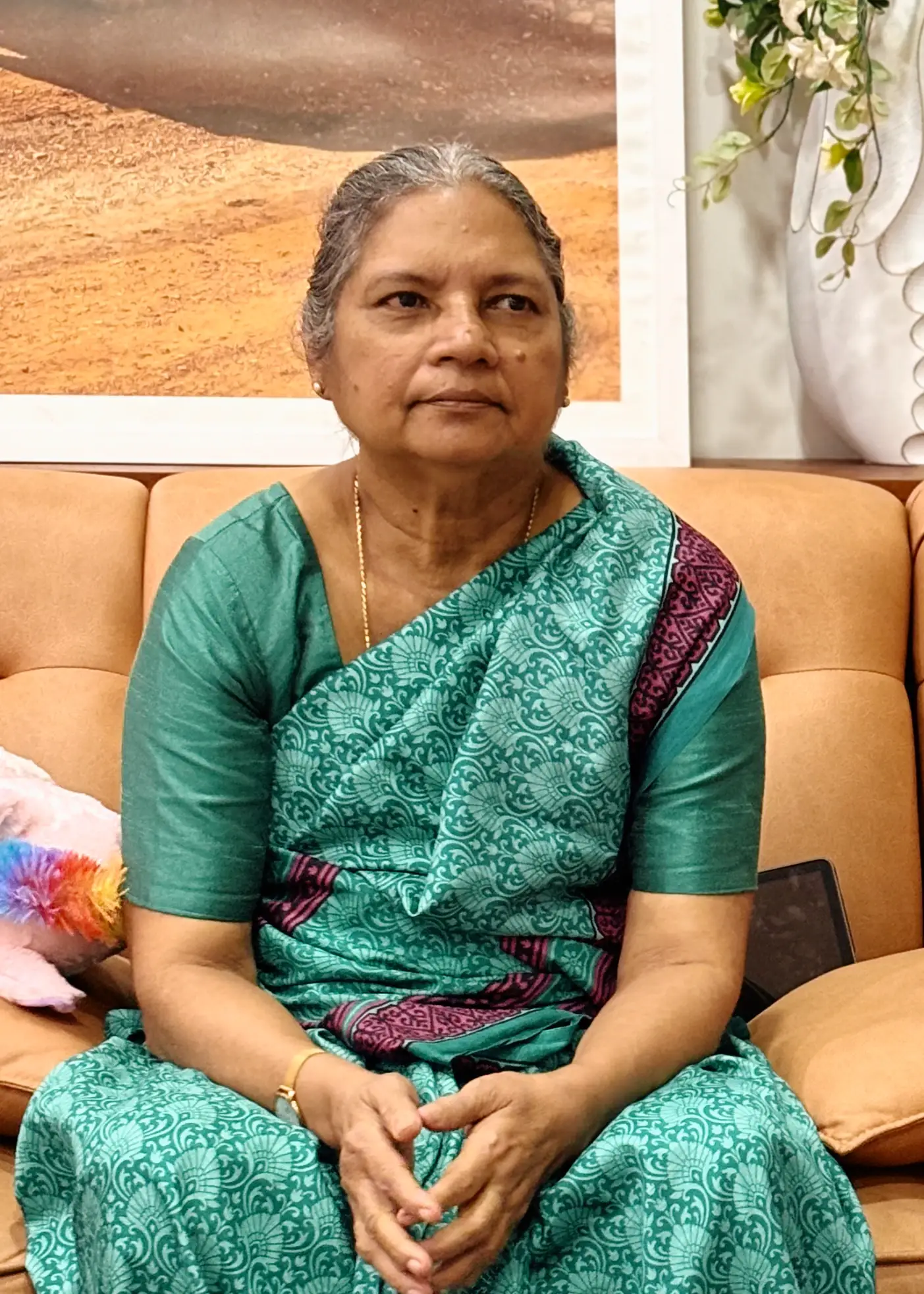
Lilly Joseph, the author of The Language of Chemistry, Playbook®, seated and facing the camera.

The author

Lilly Joseph

A chemistry teacher at St. Aloysius ISC School, Kochi, who first used this method with her own class in 1992. Her students were not failing chemistry. They were failing to write it — the symbols, the valency, the formulas, the balanced equations. Every syllabus asks for that part, and none sets aside time to teach it. The Playbook is what she built to teach it on purpose.

  • · Head of the Chemistry Department at St. Aloysius Convent ISC School, Kochi
  • · An examiner for the ISC examination for three years

Both are from an open recommendation written on the school's letterhead by its Principal, and signed and stamped there. It carries no date, so neither is stated as a year and neither is claimed as current.

“Chemistry involves the study of a large number of Elements and Compounds. It is very inconvenient to write the Full Names of Elements and Compounds. The creation of Symbols and Formula solved this problem. […] The 10th standard CBSE, ICSE and SSLC Examinations reveals the fact that the students find it very difficult to write Symbols, Chemical Formula and Balanced Chemical Equations.”

From the preface
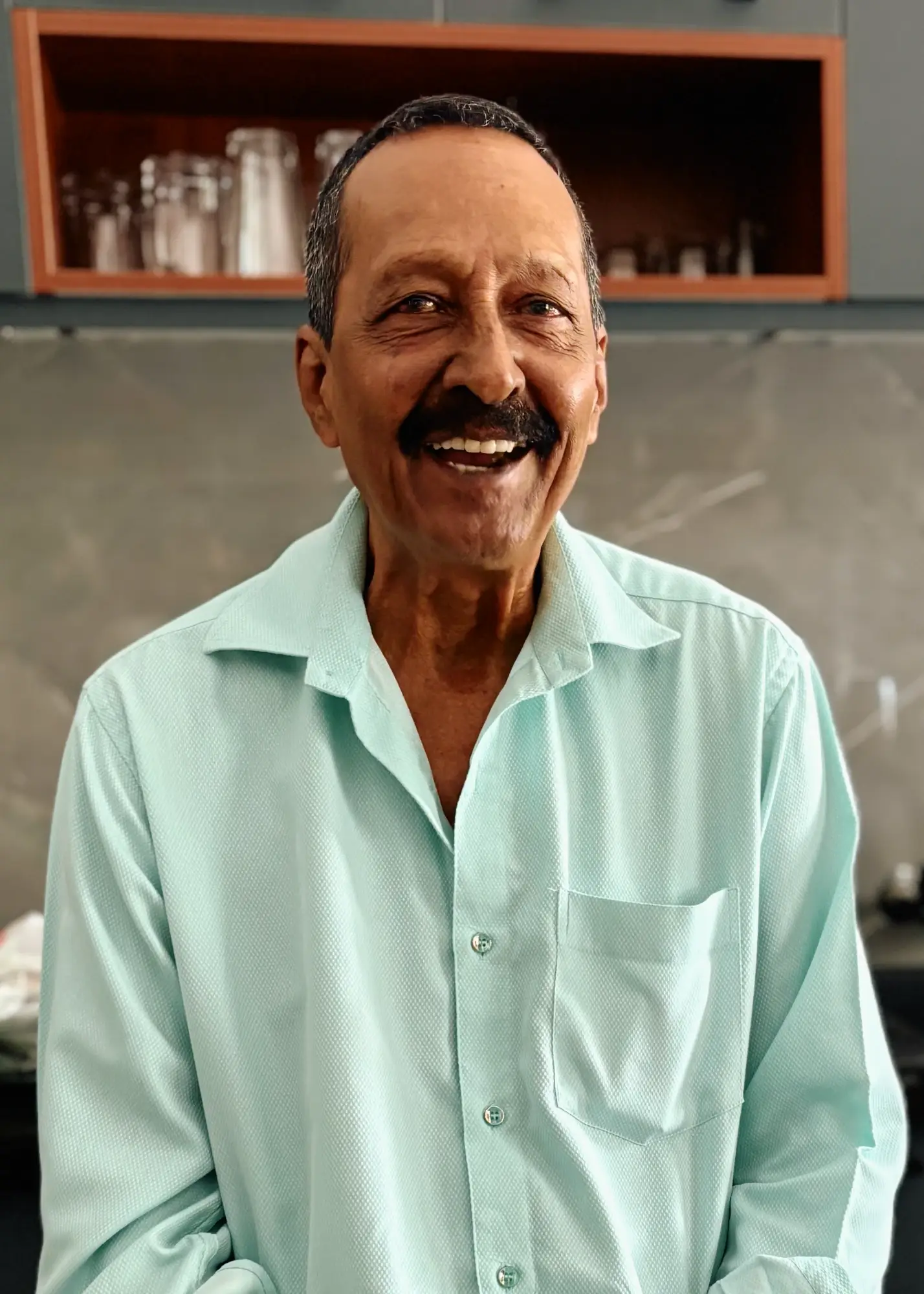
Stanley Suresh Joseph — content, design and layout, since 1992, at Playway Books.

Content, design and layout · since 1992

Stanley Suresh Joseph

Stanley Suresh Joseph has worked on the Playbook’s content, design and layout since 1992. That runs from the first sets Lilly Joseph used with her own class to the edition in print today. The charts a student reads, the token sheets they punch out and the order a page puts things in are his.

“A page has to be laid out in the order a child meets it, not the order that is easiest to print. Most of what I have done since 1992 is move one thing above another until a student reaches for the tokens before they reach for the pen.”

In his own words
Paul Joseph — owner · strategy, product and marketing, since 2022, at Playway Books.

Owner · strategy, product and marketing · since 2022

Paul Joseph

Paul Joseph took Playway Books over in 2022 to build it into a brand. He owns and runs it end to end — the business, what gets published next, and how it reaches the parents and schools it is for. The method and the manuscript are Lilly Joseph’s and Stanley Suresh Joseph’s; the decisions about where the book goes from here are his.

“The method is the product. What we publish next, how it is described, who it is sold to — all of it starts from a child pushing a token across a page. A publisher who treats the pedagogy as something to market around rather than something to protect has stopped being worth buying from.”

In his own words

The letters

Both of them, and how they came about.

They are not the same kind of document, and it is worth saying which is which. CISCE's is a letter of appreciation for the method. NCERT's is a set of comments on the method, and it opens by calling the method a good attempt.

Neither is accreditation, neither is approval of the book as a prescribed text, neither is current or ongoing, and Playway Books does not describe them as any of those.

CISCE · 18 December 2002

Council for the Indian School Certificate Examinations — Research, Development and Consultancy Division, New Delhi. 18 December 2002.

The Council publishes a Pupils Performance Analysis each year. It identifies, year after year, the same difficulty: students cannot reliably write symbols, chemical formulas and balanced chemical equations. In 1995 the Council’s Research, Development and Consultancy Division wrote to ICSE schools asking them to forward approaches they had tried that worked on that difficulty, so the approaches could be shared.

The method had by then been in use at St. Aloysius ISC School, Kochi since 1992. On 4 December 2002 the school’s Principal sent a copy of The Language of Chemistry, Playway Method to the Council. Fourteen days later the Principal received the Council’s reply. The Council wrote that the kit she had developed

will certainly help in making the basic concept of writing correct chemical formulas and balanced equations clearer to students.

That is a letter of appreciation for an approach. It is not accreditation, not approval of the book as a prescribed text, and not a current or ongoing endorsement — and nothing on this site describes it as any of those.

NCERT · 1 July 2008

National Council of Educational Research and Training — Department of Education in Science and Mathematics, New Delhi. 1 July 2008.

A copy of the kit and the kit manual, Language of Chemistry by Play-way Method, was sent to the Director, NCERT. The reply — reference 1936/DESM, dated 1 July 2008, from Dr. Ruchi Verma, Lecturer, Department of Education in Science and Mathematics — comments:

It is a good attempt for using play-way method in teaching of language of Chemistry.

Activities given in the manual are thought provoking.

This is well appreciated that suggested activities follow step up procedure and guidelines for self-assessment are given in the activities.

These three sentences are quoted verbatim from the letter, checked against the original on 2 September 2026. An earlier version of this page quoted the first of them in tidied-up wording — “for using ‘Play-Way Method’ in the teaching of ‘The Language of Chemistry’” — which is not what the letter says.

The letter describes itself as “the comments/suggestions of NCERT”, and this page describes it the same way rather than as an appreciation — it contains appreciation, which is not the same as being one.

It is not accreditation, not approval of the book as a prescribed text, and not a current or ongoing endorsement.